Picture this scenario:
Several groups within your organization have been working together on a huge quote. Sales has made several on-site visits. Marketing has put together some customized presentations. And your pricing team recommended what you believed to be the best possible price, given everything you know about the customer and market. Sales has sent over the response to the RFQ, and now you’re waiting to hear back.
Finally word comes. You lost the deal.
And when you ask the salesperson why, I bet you can imagine what they’re going to say:
“We lost on price.”
Getting to the truth of the matter
Pricing almost always gets the blame when a deal goes south. And when leadership is constantly hearing, “The customer says we are too expensive,” they start to conclude that the pricing team isn’t handling things appropriately. They start to put pressure on the team to lower prices or offer bigger discounts.
However, when a customer says that the price was the reason for the decision, that’s usually not the whole story. No buyer is going to say “Well, the rep didn’t articulate the value appropriately” or “You’re sales team is bad at negotiating.”
In these situations, pricing becomes the scapegoat for a whole lot of reasons:
- It’s simple and definitive (especially when compared to a more esoteric reason like “our value proposition wasn’t clear).
- Sales reps understandably avoid admitting their own execution problems.
- It’s literally the buyer’s job to say that your price is too expensive.
- Price is an easy thing to blame when you don’t want to dig deeper.
- It’s convenient for the sales team to suggest someone else (namely pricing) should fix the problem.
A more likely story
Because you know that sales is going to blame pricing when they lose a deal, you might be tempted to disregard whatever they say about the reason why you lost a deal. After all, you know they’re not going to give you the whole truth.
But if you listen closely, the way that sales blames pricing often contains a hint about the nature of the true problem:
- “We’re losing to competitors on price” probably means either that sales isn’t selling your product’s differentiated value, or that you’re targeting the wrong segments.
- “Customers are demanding bigger discounts” almost always indicates that you’ve trained your customers to negotiate or that your initial prices aren’t credible.
- “Our prices are too high” can indicate a bigger problem, like your product/market fit is weak, or you’re not reaching buyers who value what we offer.
- “We need more pricing flexibility” tells you that sales wants to avoid difficult conversations.
A better diagnosis
The next time sales tells you that a pricing problem was to blame for a lost deal, don’t accept that at face value. If you let that idea persist, you can actually set up a destructive cycle where lower prices lead to eroded margins, which leads to greater pressure to close deals, which leads to more discounts again.
Instead, push back against those assumptions. Start asking questions that will help you get to the heart of the matter. We explain how in Diagnosing Pricing Problems.
We’re not saying that pricing never gets anything wrong. Your team can and will make mistakes. But before accepting full blame for a lost deal, make sure you investigate fully first.
Diagnosing Pricing Problems
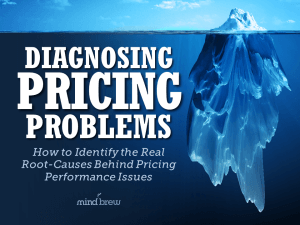
When companies stop at a default diagnosis of, “Something’s wrong with the pricing,” they never identify and fix the true root-causes of the issues. In this on-demand webinar, learn how to identify the real root-causes behind pricing performance issues.