Have you been down to a factory floor recently?
If it’s been a while (or never), you might be surprised by the level of automation in most manufacturing operations today. Gone are the days when individual operators were manually drilling holes or riveting sheet metal. Now, robots do much of that work. The operators have a far more complex role: overseeing several robots, making precision adjustments, and troubleshooting when things go wrong.
Far from being replaced, these operators have become even more valuable. Their expertise is deeper, their skills more specialized, and some are even regarded as irreplaceable for their ability to solve issues others can’t. They keep the factory running smoothly.
But despite their advanced capabilities, each operator still focuses narrowly on just a few steps in the process. They don’t always see the entire system—or how changes upstream or downstream affect the flow.
The engineers who oversee the assembly line, however, have a very different job.
They might not know what error code E5743 means on robot AH451, but they understand the full process flow. They spot bottlenecks, analyze throughput, and re-engineer workflows to maximize output and efficiency.
Pricing operators vs. pricing engineers
At PricingBrew, we often compare the pricing function to a machine. Inputs like market data, product costs, and segmentation flow in—and if the process is well designed, optimized prices and increased margins come out the other side.
Within this machine, pricing teams can act more like operators or more like engineers.
Operator-style teams are highly responsive. They generate price quotes, update lists, or apply discounts at the request of sales or management. They may be fantastic at these tasks. In fact, the organization may rely on them so heavily that nothing moves without their involvement.
But as valuable as they are, operator-style pricing teams often work within a narrow scope. They’re focused on immediate requests, not the system as a whole. And that means no one’s addressing root causes, inefficiencies, or missed opportunities.
By contrast, pricing teams that function like engineers take a broader view. They ask bigger questions: Are we segmenting effectively? Are we accounting for price elasticity? Are our discounting practices aligned with willingness to pay? They still support the organization’s pricing needs—but they also analyze pricing performance, model optimization scenarios, and guide strategic changes to improve outcomes across the board.
Becoming a pricing engineer
Where does your pricing team sit on this spectrum? Are you more tactical or more strategic?
To evolve into a pricing engineering function, start by carving out time for upstream work. That might mean analyzing deal performance patterns, reviewing segmentation models, or setting guardrails for pricing discretion. Don’t abandon support activities, but make sure strategic efforts aren’t always taking a back seat.
The PricingBrew Journal has plenty of guidance for teams making this shift. Here are a few subscriber resources that can help:
- From Tactical to Strategic Pricing
- Pricing Process Improvement
- Delivering No-Brainer Pricing Guidance
- Developing A Winning Roadmap for Pricing Success
An engineered pricing function builds consistency, reduces fire drills, and improves performance—even when conditions shift. And when you understand the entire system, you’re better equipped to identify the high-leverage changes that move the needle on profitability.
From Tactical to Strategic Pricing
Some teams are so mired in tactical grunt work and daily firefights that they never make progress on strategic pursuits. How have other pricing teams transitioned into more strategic functions? What steps did they take?
Pricing Process Improvement
In this session, we discuss the critical differences between process types, how to use end-to-end process mapping for diagnostics and prioritization, pricing technology considerations, and common mistakes to avoid.
Delivering No-Brainer Pricing Guidance
While equipping sales reps with accurate pricing guidance is a priority for many, it's hard to get right. In this session, learn seven key ingredients to deliver guidance your salespeople will actually use.
Developing a Winning Roadmap for Pricing
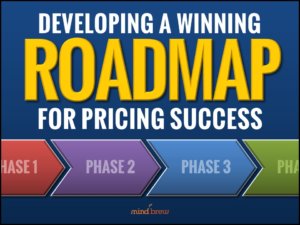
From our research, leading pricing functions go through key evolutionary phases in becoming more effective and strategic. In this 3-part training webinar, learn how to develop a roadmap that streamlines that evolution with a plan to be a more valuable and strategic function.