Futurist Karl Shroeder says, “Foresight is not about predicting the future, it’s about minimizing surprise.”
Over the past few years, we’ve all experienced a good bit of surprise. Pandemics. Supply chain interruptions. Civil unrest. War. Mass shootings. Extreme weather. Labor shortages. Many of these events caught even the most revered prognosticators unaware.
With so much uncertainty in the recent past, it can be tempting to give up on any attempt at planning. None of us really knows what is coming in the year ahead. What hope do we have of putting together a reasonable plan for the coming quarter, let alone the entire year? Life has seemed so much like a roller coaster that you might think all you can do is throw your hands in the air, scream, and hope to survive.
But believe it or not, uncertainty can actually be an asset.
When things have been going along on a steady course for a while, many business leaders become complacent. They assume that next year will be much like the year before. As a result, in good times, many companies fail to make solid contingency plans. And frankly, that’s the situation many organizations were in just a few years ago.
But when you’ve had a couple of topsy-turvy years, you understand that almost anything could happen. That puts you in the right frame of mind for considering possibilities.
As you plan for what’s ahead, we encourage you to think through some “what if?” scenarios. Brainstorm with your team about what might happen and think through what you would need to do in response.
Often, this exercise results in a recognition that the company might not be very well prepared for some circumstances — including situations that aren’t all that unlikely in the 12 months ahead. Consider what you would need to do to be better prepared and start making the changes you need to be better positioned to weather a coming storm. That might involve adopting new perspectives on how pricing will need to react to customers, competitors, or the broader market. It might mean developing a new initiative to have the data and tools in place so you’re more prepared. Or it might require something else, depending on the particulars of your company and industry.
Inevitably, some of those “what if?” scenarios will become “what now?” scenarios. As the quote from Shroeder implies, a little foresight — and preparation — in the present can make it much easier to respond to whatever the future brings.
PricingBrew has several resources that can help you think through some of those “what ifs”:
- Pricing Through Uncertainty deals very directly with the challenges of managing unpredictability. It provides guidance for developing the most helpful mindset and how to leverage data and research to minimize risk.
- The Fundamentals of Pricing Intelligence covers how to design and implement systems to gather market signals and intelligence that will help price you more effectively in the future.
- Anticipating Competitors’ Pricing Moves examines how to predict competitors’ pricing actions (and reactions) to prevent them from spoiling your pricing efforts.
Of course, it’s impossible to anticipate the exact nature every potential event. But by better preparing for a range of possibilities, you’ll lessen the impact of any particular surprise. And that’s what forecasting is really all about.
Pricing Through Uncertainty
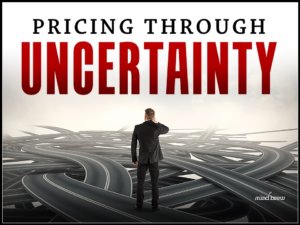
As pricing pros, we're expected to make weighty decisions with imperfect information. How do we "illuminate" the landscape a bit? What steps can we take to reduce the ambiguity, uncertainty, and risk?
The Fundamentals of Pricing Intelligence

In pricing, it's easy to feel like you're making decisions in a vacuum. But there are many powerful sources of pricing intelligence you can leverage. In this on-demand webinar, learn how to design and implement systems for tapping into those sources of intelligence and how best to respond.
Anticipating Competitors' Pricing Moves

Your competitors' pricing actions (and reactions) add even more complexity to pricing. So what can you do to anticipate competitive moves and prevent them from spoiling your pricing efforts?